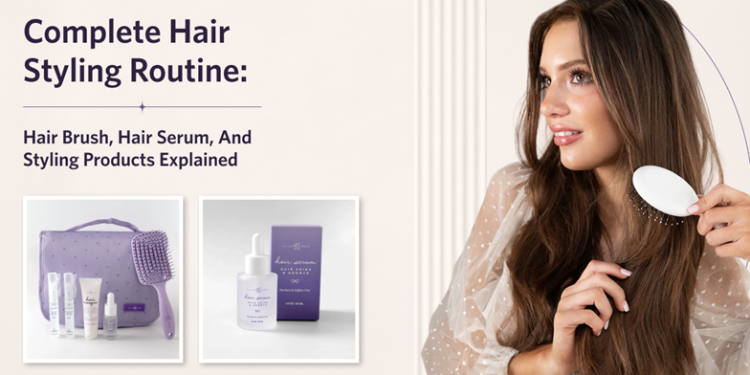
Complete Hair Styling Routine: Hair Brush, Hair Serum, and Styling Products Explained
We’ve all been there-standing in the beauty aisle, surrounded by a dozen bottles, each one promising to be “the one.” The world of hair styling products can feel overwhelming, and the advice online tends to either oversimplify everything into a single magical product or overcomplicate it into a fifteen-step routine nobody has time for.
The truth: great hair isn’t about doing all the things-it’s about doing the right things, in the right order, for your specific hair. Simple as that. This article walks you through each step and will help you figure out which parts genuinely apply to you.
Start With How You Dry Your Hair
Most hair routines start too late. By the time people reach for their styling products, they’ve already made decisions and missed important steps that affect the outcome of their style and health of their hair.
How you dry your hair sets the tone for everything else. Rubbing it vigorously with a regular bath towel roughens the hair cuticle, causes friction damage, and leads to that frizzy, tangled mess that no amount of serum can fully fix afterwards.
The solution is switching to a microfiber hair towel, which absorbs water much more gently by blotting rather than rubbing. It sounds like a small thing. However, the difference it makes to how your hair looks and feels is genuinely noticeable, especially for anyone with curly, wavy, or fine hair that’s prone to frizz.
After drying, the ideal starting point is damp hair, not soaking wet, not fully dry. Damp hair is the most receptive to products, holds styles better, and responds more gently to heat. Rushing this stage by blasting soaking hair with a hair dryer tends to cause more damage than any subsequent styling step.
It’s a simple switch worth making: if you use a regular cotton towel on your hair, try using a microfiber hair towel for a week. Squeeze water from your hair rather than rubbing, and let it sit wrapped for five to ten minutes. Most people notice a significant difference in frizz and smoothness and that’s before applying any styling serums or other products.
The Weekly Reset Your Hair Actually Needs
Before we dive into your daily styling routine, let’s talk about the less-frequent step that secretly makes everything else fall into place.
A hair masque used once or twice a week, (depending on your hair’s condition), is a deep treatment that restores moisture, repairs damage, and gives your hair the kind of softness and manageability that daily conditioner simply can’t achieve on its own.
If your hair feels dry, brittle, dull, or difficult to style no matter what you do, the issue is often that it’s dehydrated or damaged to a level that daily products aren’t designed to reach. A hair masque stays on for longer than conditioner, usually ten to twenty minutes, which gives the ingredients enough time to actually penetrate the hair shaft rather than just coating the surface. The result is healthier hair that responds better to brushing and holds styles more easily.
Different hair masques work for different needs. Moisturizing masques suit dry and color-treated hair. Protein masques work well for hair that’s been heat-damaged or chemically processed and feels weak or stretchy. You don’t need both. Knowing which category your hair falls into helps you choose the one that will have the biggest impact for your hair.
Quick guide: Apply a hair masque to clean, damp hair from mid-length to ends, avoiding the roots. Leave it for as long as the packaging suggests, then rinse thoroughly.
Choosing the Right Hair Brush
Your hair brush is quietly the hardest-working (and most overlooked), tool in your styling collection. You grab it on autopilot, drag it through daily, and might never think about replacing it. Until bristles start flying. The problem: the wrong brush for your hair type can wreak more havoc in one brush through than almost anything else you do or apply to your hair.
The basic principle is to use a wide-tooth comb or a detangling brush on wet hair, never a paddle brush or boar bristle brush. Wet hair is fragile and stretches more than dry hair before it breaks. A brush with widely spaced teeth glides through knots without pulling or snapping the hair. A fine-toothed or tightly bristled brush on wet hair causes breakage that accumulates over time.
For dry styling, the type of brush you need depends on what you’re trying to achieve.
- A paddle brush is excellent for smoothing and straightening longer hair while blow-drying.
- A round brush creates volume and a gentle curl or wave at the ends.
- A boar bristle brush distributes the hair’s natural oils from root to tip. They are brilliant for adding shine to already-styled hair but need to be used gently and only on already detangled, dry hair.
In addition to choosing the correct brush for your hair type and desired styling, it’s important to regularly clean your brush. Give it a quick clean once a week. Pull the hair out, wash the base and it’ll actually do its job again instead of recycling gunk back into your freshly washed hair. Two minutes. That’s all it takes.
Where Does Hair Serum Fit In?
Hair serum is one of those products that works brilliantly when used correctly and feels completely pointless when used at the wrong stage or in the wrong amount. Those who have written off serums entirely (because they made their hair feel greasy), have typically applied it in the wrong way or applied too much.
A hair serum is primarily designed to be applied to damp hair before heat styling or air-drying. It creates a light protective layer over the hair shaft, reduces frizz, adds shine, and helps the hair dry in a smoother, more controlled way. Applied at this stage, even fine hair can benefit from a small amount without feeling weighed down.
Applied to dry hair after styling, it works better as a finishing product, but the amount matters enormously. For most people, a few drops warmed between the palms and smoothed lightly over the surface of styled hair is all that’s needed.
In addition, different serums do different things. Lightweight silicone-based serums are best for smoothing and adding shine. Argan oil-based serums add nourishment alongside the smoothing effect. If your hair is fine, look for serums specifically labelled for fine or thin hair as these are formulated to give the benefit without the weight.
The Styling Products Worth Understanding
Walk into any pharmacy or beauty store, and you’ll find shelves full of mousses, creams, gels, sprays, waxes, and pastes all promising similar results. Deciding which ones you actually need comes down to understanding what each category is designed to do and then matching that to what your hair needs on a given day.
- Heat protectant spray is non-negotiable if you use any heat tool: straightener, curling iron, or blow dryer. It’s the one product that’s not about aesthetics. It’s about preventing damage. Applied to damp hair before heat, it reduces the temperature your hair is actually exposed to and protects the cuticle. Skipping it consistently causes cumulative damage that gradually makes hair more brittle, frizzy, and harder to style. It takes just five seconds to use and over time you’ll notice a significant improvement.
- Mousse adds volume and hold to fine or curly hair without the stiffness of gel.
- Curl cream defines and moisturizes curly or wavy hair while keeping it soft.
- Texturizing spray adds grip and movement to straight hair that’s too smooth to hold a style. A light-hold hair spray locks a finished style in place without making it feel lacquered.
- One product worth mentioning that sits slightly apart from the usual styling category is hair mascara. It’s a targeted product that covers grey or grown in roots or adds a temporary pop of color to specific sections of hair between appointments. Applied with a wand just like regular mascara and it washes out in your next shampoo. Hair mascara is a great added product for anyone who colors their hair and wants a quick, easy way to manage roots in between salon visits.
The simplest rule for styling products: start with less than you think you need. You can always add more, but removing excess product means either washing your hair again or spending the day with hair that feels heavy. Most products are effective in smaller amounts than the packaging suggests.
What a Simple Routine Actually Looks Like
A complete hair styling routine doesn’t need to be long. The full sequence can look something like this:
Wash and condition, then wrap hair gently in a microfiber hair towel to absorb water without friction. Once hair is dry to being only damp, apply a heat protectant if you plan to use heat tools. Add a few drops of hair serum if your hair needs smoothing or frizz control. Brush through gently with a wide-tooth comb or detangling brush, then style as you normally would. Once a week, swap your regular conditioner for a hair masque and give your hair a twenty-minute nourishing treatment.
Each step in the sequence has a clear purpose, aren’t complicated, and together they add up to hair that behaves better, looks healthier, and responds more reliably as you style.
The bigger shift isn’t really about the products; it’s about understanding what each one is actually doing. Knowing why you’re reaching for something and when it’s best designed to work, ups your hair routine game and improves your overall style and health of your hair.
The best hair routine is the one you’ll actually do. A simple three-step ritual every single day beats a fancy twelve-step saga you abandon by Wednesday. Grab the right towel, the right brush, a solid serum-and let consistency work its magic.